Edelevery Manager
Aruba • Year 2025
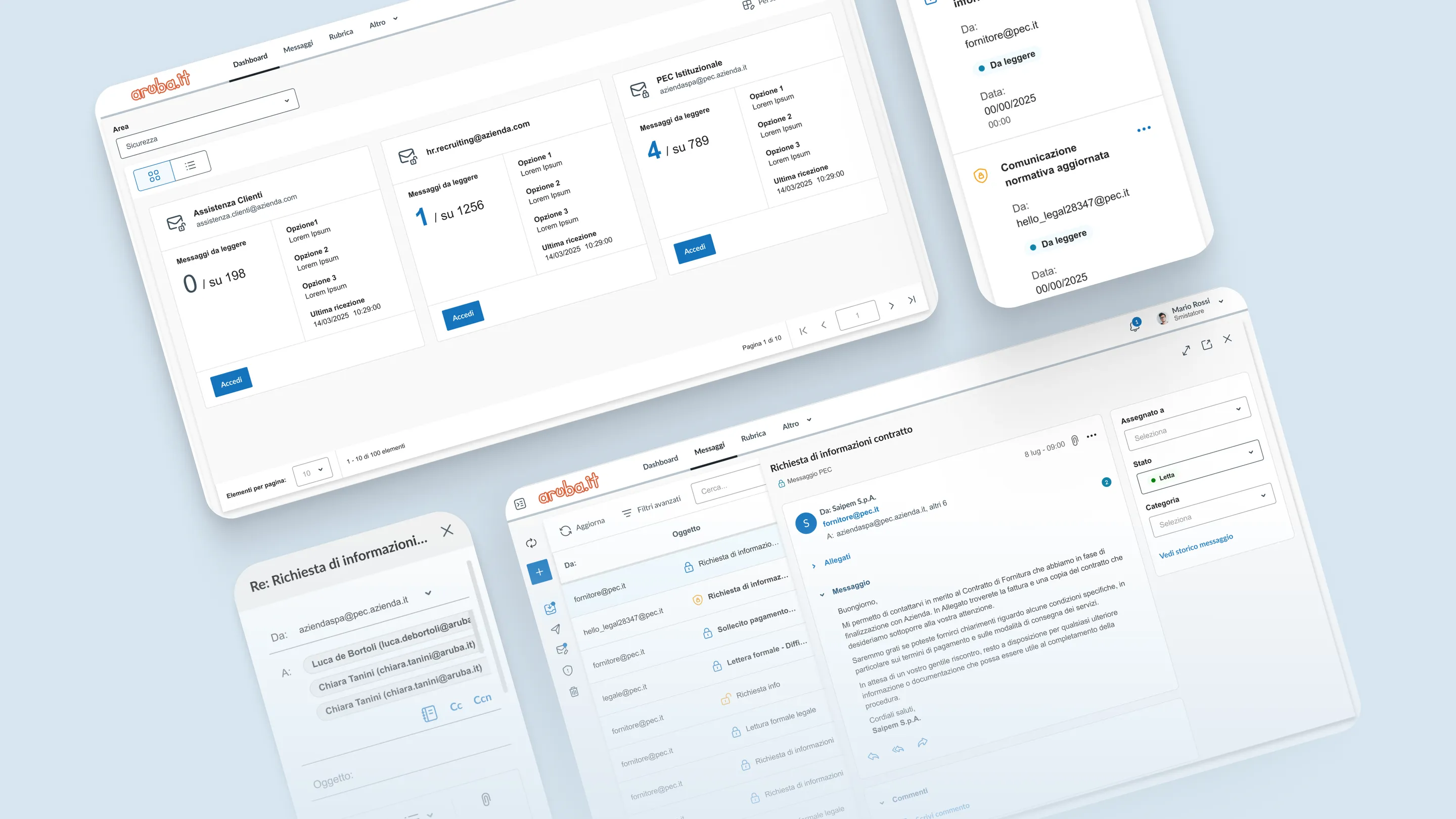
The challenge
Bringing a certified-email management platform onto Aruba's new design system, within a fixed scope.
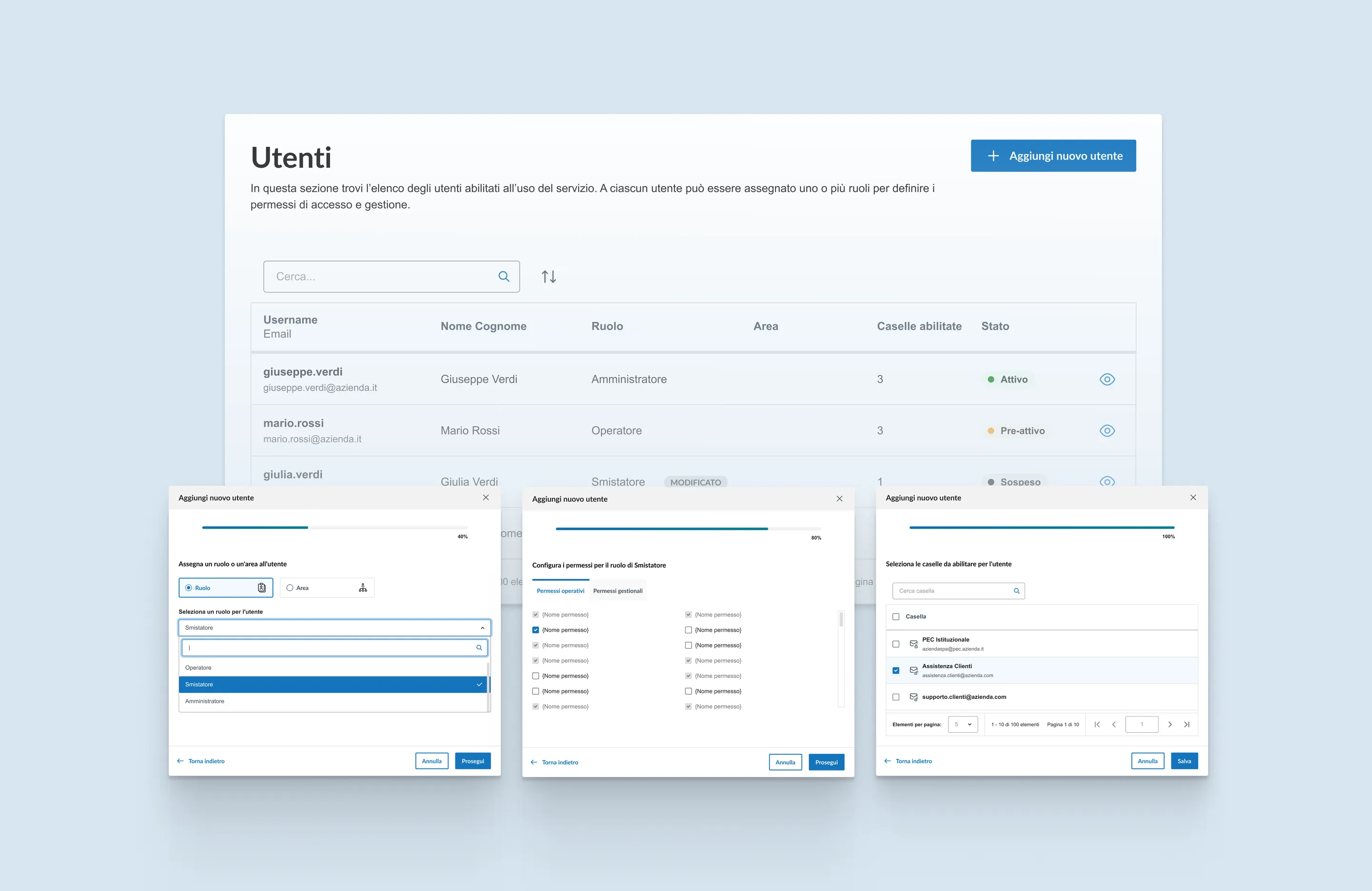
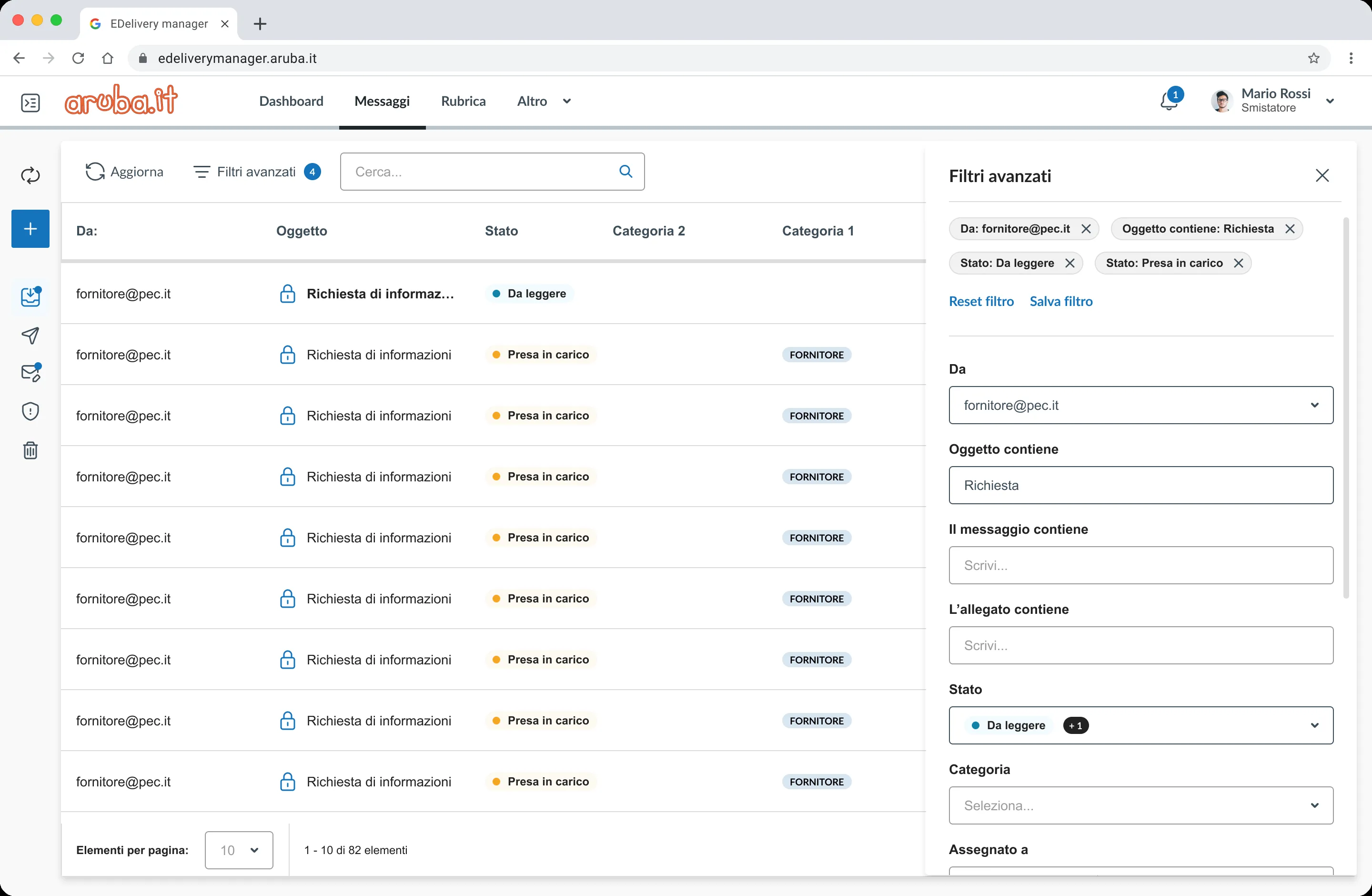
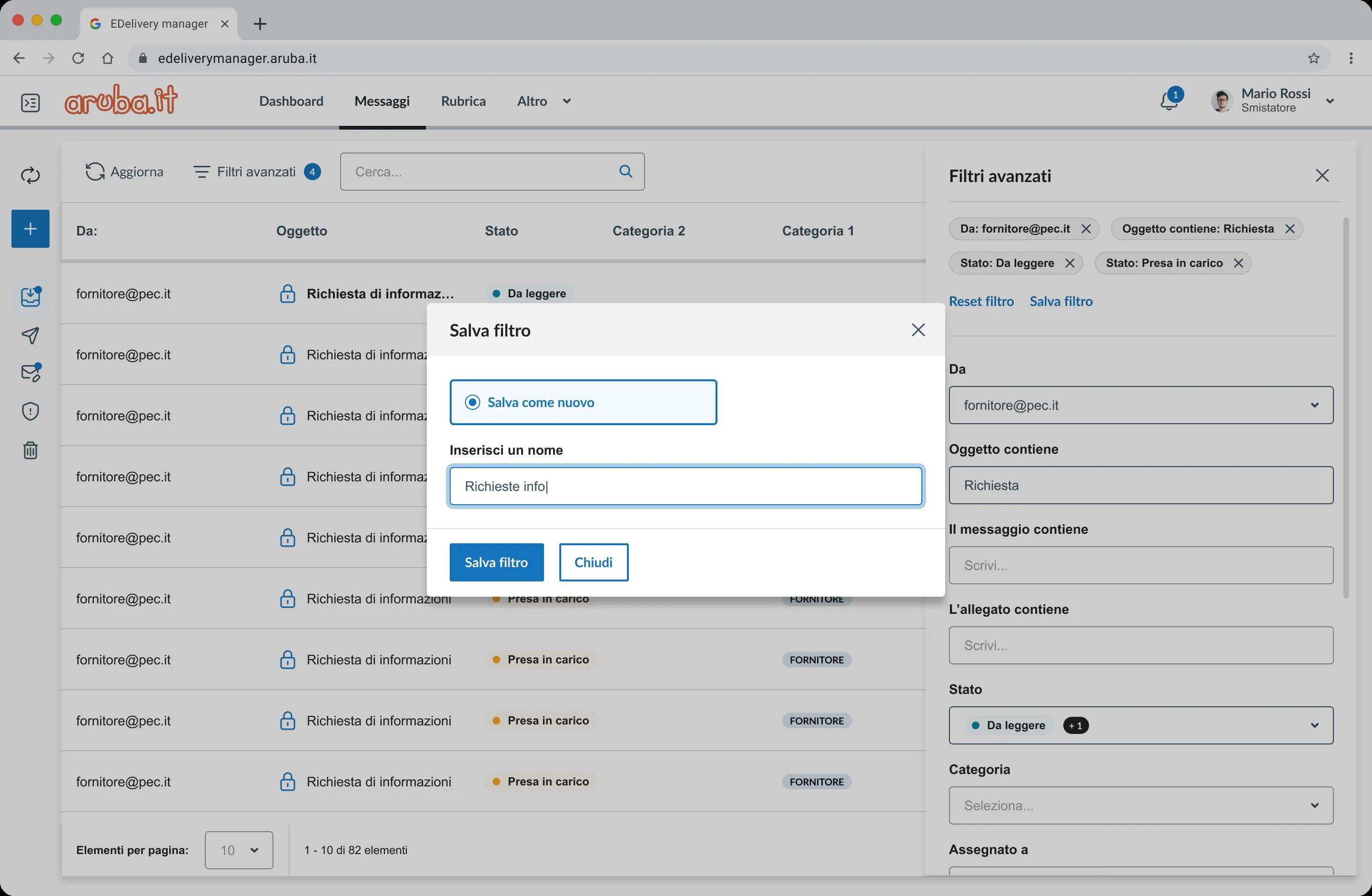
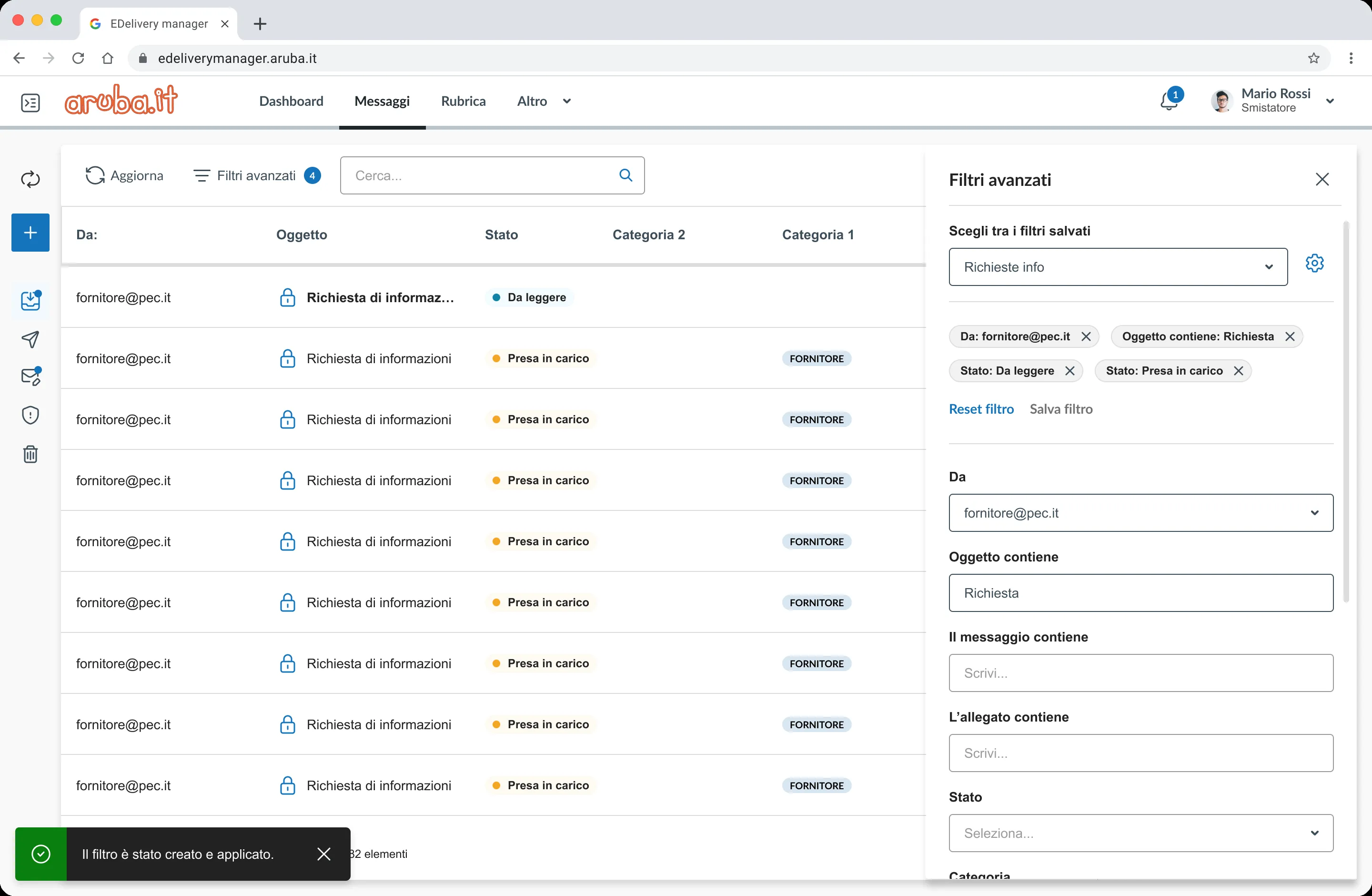
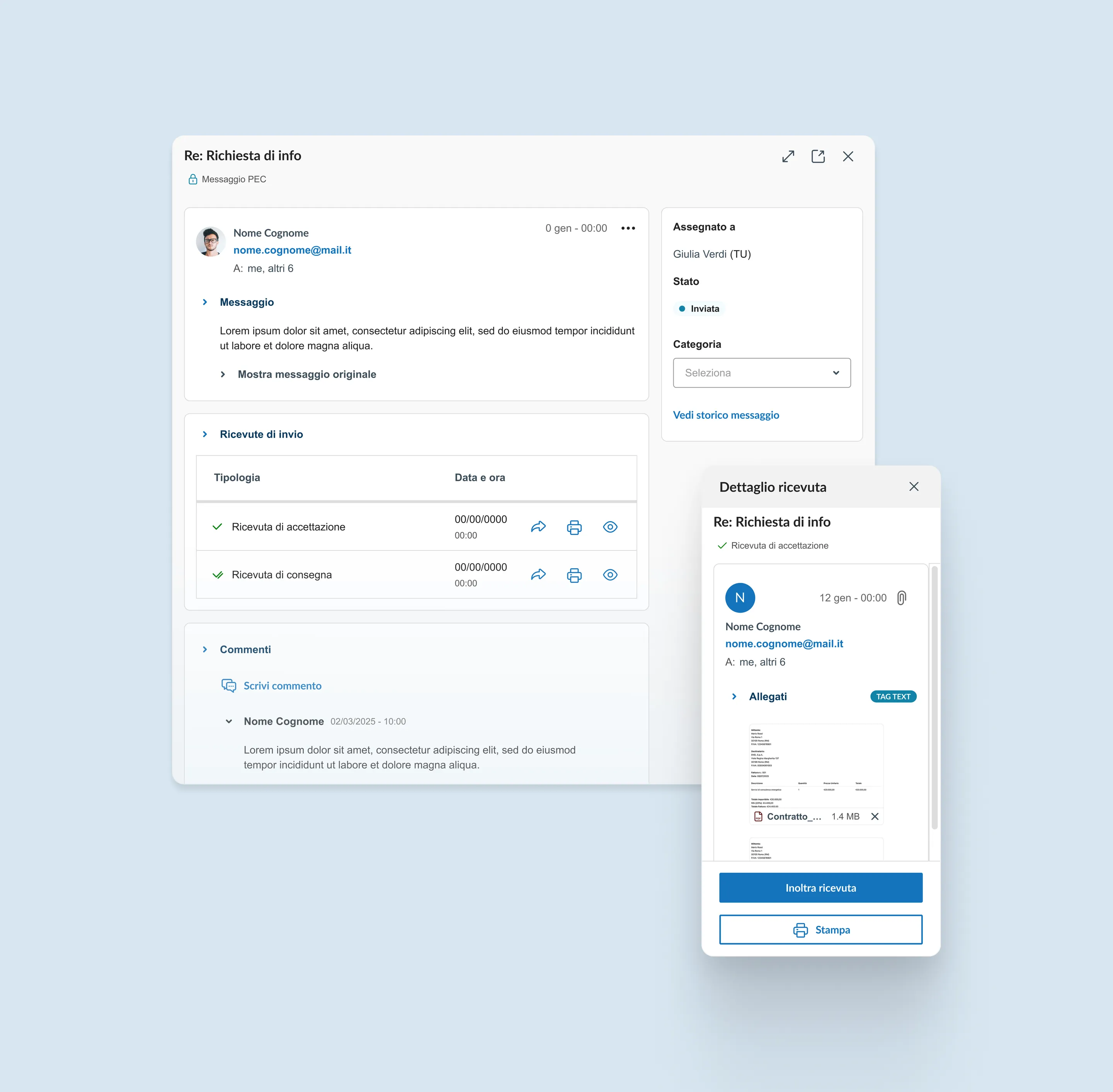
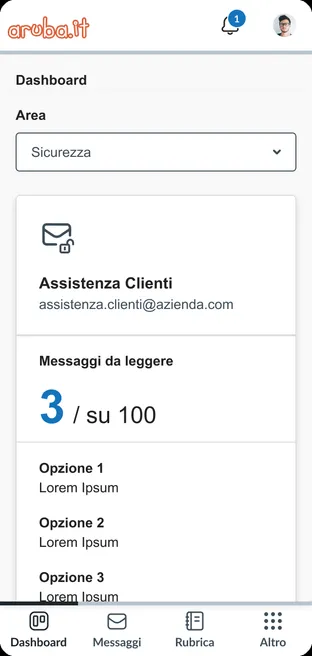
In 2025 Aruba renewed the design system of its whole ecosystem. eDelivery Manager — the platform companies use to manage their certified-email accounts and route messages internally — had to follow.
The alignment wasn't only visual, though. Several components of the existing platform behaved differently from what the new system expected, and changing a behaviour means development work, with a real impact on time and resources. The project's resources were fixed from the start.
So the question wasn't how to make the platform better, but how much was worth changing, where to focus the investment, and what to leave as it was.
- Sector
- Certified email for businesses
- Duration
- 9 months (January – September 2025)
- Team
- UX designer, project manager, front-end developers, Aruba design system team
- Tools
- Figma
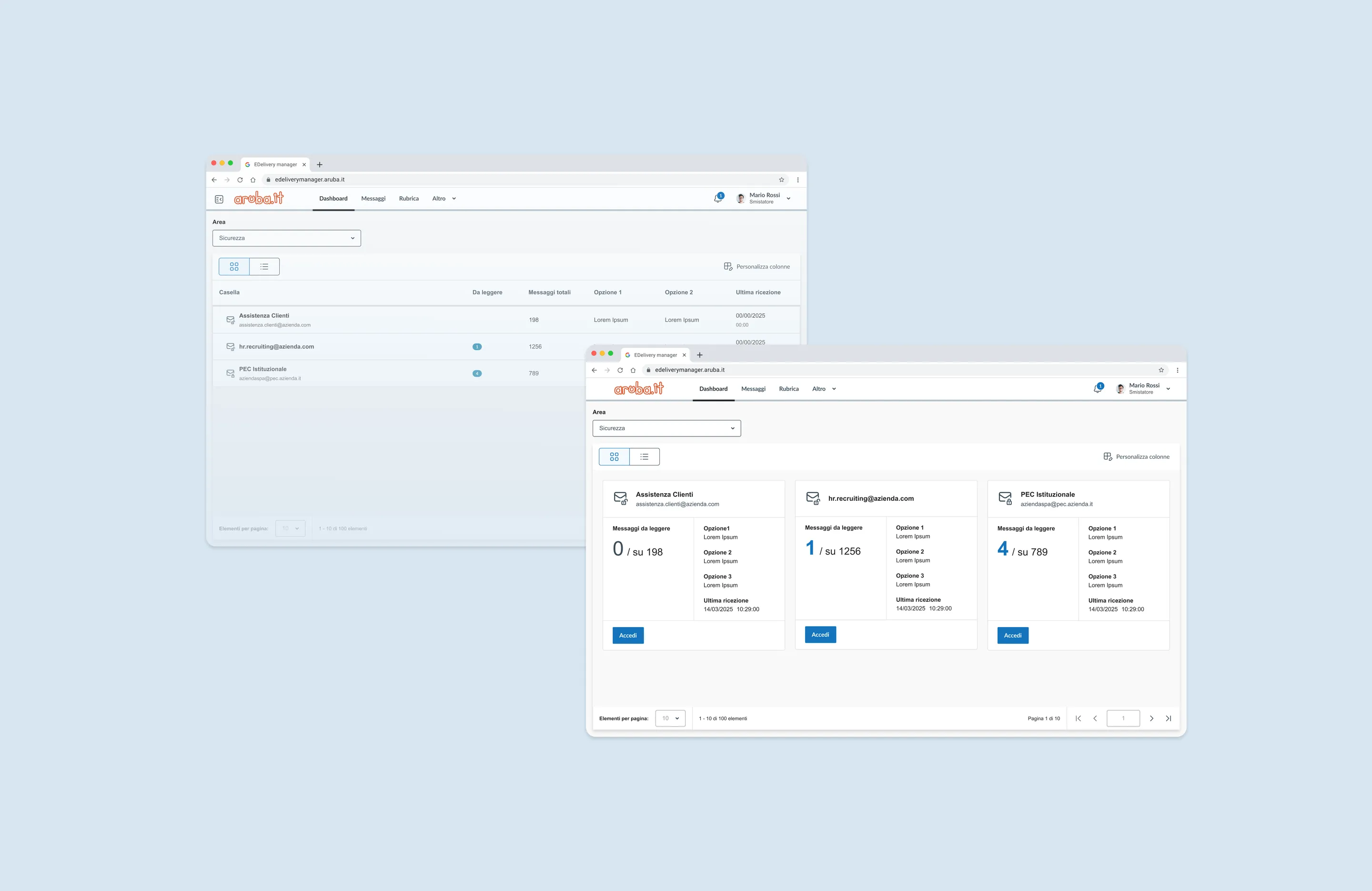
My role
- Adapting the navigation components to Aruba's new design system
- Making the case for the costly proposals to the project managers
- Behaviour specs of the components for development, on my own initiative
Research, interviews and decisions on navigation and features were led by the team's UX designer with the project managers. I took part in support.
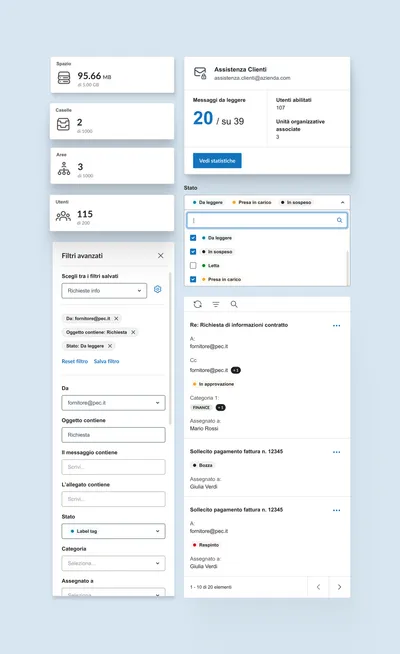
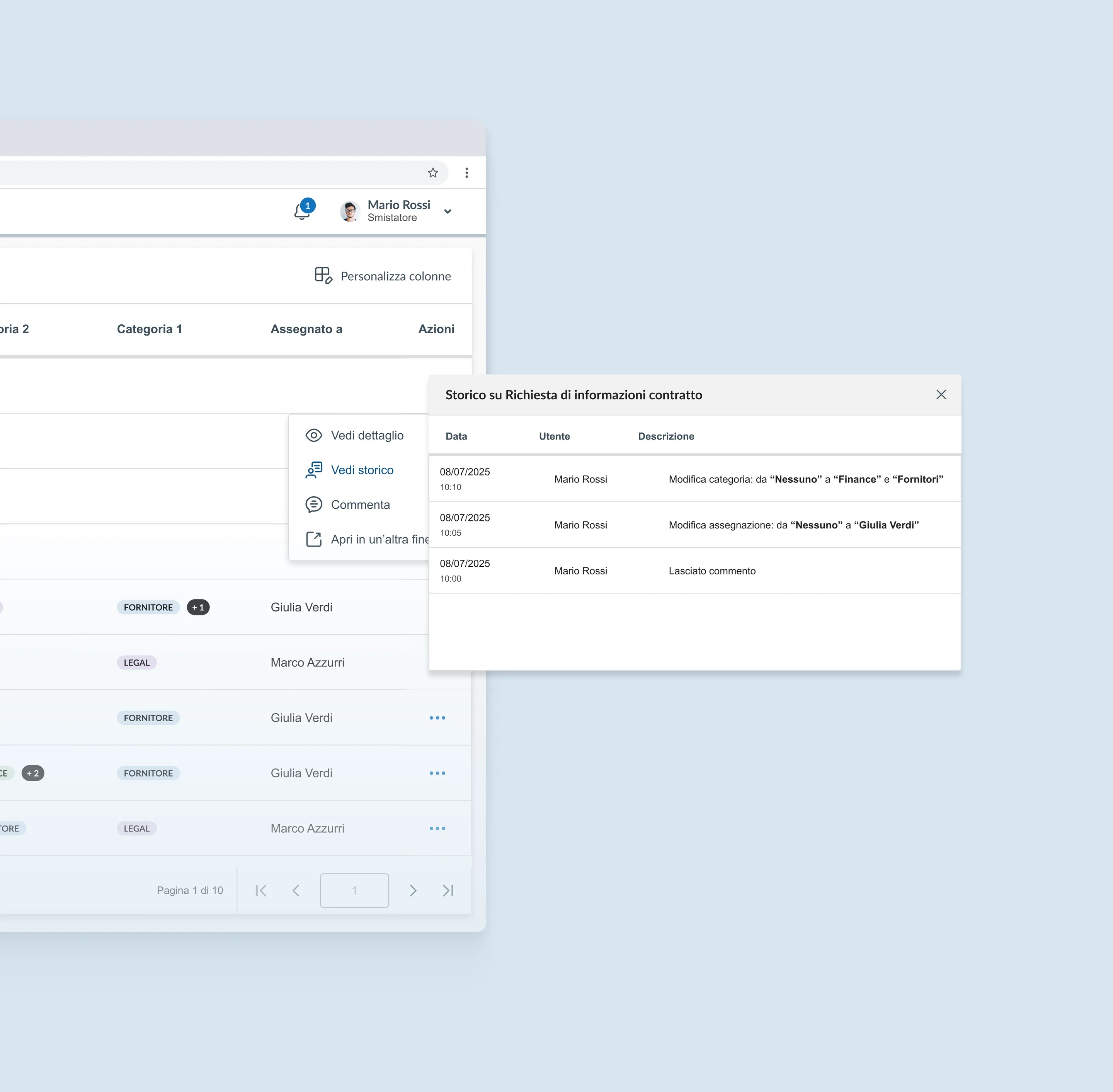
The result
The September 2025 milestone was delivered to development, with interfaces and specs. The dual grid/list view was approved and taken into development.
I then moved on to another project. I have no usage data for the platform and claim none.
What remains is the method: an existing platform brought onto a new design system while staying within the planned resources.
What I'd do differently: I'd involve the front-end team in estimating costs while I'm still designing the proposals, not right after, so I don't get attached to solutions that turn out to be unfeasible.